Location
Room
Tranquility/Comfort
Discover Kerodia, a residential project that is part of the Greenwood real estate project, an exceptional project nestled in the heart of a soothing green environment in Woluwe-Saint-Lambert, one of Brussels' most sought-after tree-lined districts.
Conceived as a veritable urban cocoon, Kerodia offers 31 luxury apartments, designed to provide maximum interior comfort and an incomparable quality of green living. The generous terraces, a natural extension of the living space, are bathed in light and ideal for enjoying time with family and friends.
More than a residential project, Kerodia embodies a new way of living.
A warm, intimate home in a building designed for community living, with a shop on the first floor for even greater day-to-day convenience.
Price
Delivery
Location
Architecture
Interior
Interior finishes

Energy
Installed on roofs, photovoltaic panels capture the sun's energy to produce clean, sustainable electricity.

An individual electric recharging point can be installed at each parking space, to support your electric mobility needs.List of goods
floor
Number of rooms
Status
Price
When signing the authentic deed at the notary's office, the buyer pays an amount corresponding to the value of the land and the portion of the work already completed at that date, less any deposit paid at the time of the preliminary agreement.
Next, the price of the property is paid in installments, based on the actual progress of the construction work. Each installment corresponds to a specific stage of construction and is only invoiced once the work in question has been completed. A certificate from the architect is attached to confirm that the work has been carried out correctly, thus guaranteeing transparency and security for the buyer.
In addition to the purchase price of the property, certain additional costs should be anticipated:
The purchase of a new property in Belgium is governed by the Breyne Law, legislation that protects the buyer throughout the process. In particular, it provides a completion guarantee, ensuring that the property will be finished even if the developer defaults. It also includes protection against hidden defects and a ten-year guarantee covering the solidity and stability of the building.
These guarantees must be mentioned in the preliminary sales agreement and confirmed when the final deed is signed, offering enhanced legal certainty.
To understand in detail how the Breyne Act works and the protections it offers, see our article on the subject.
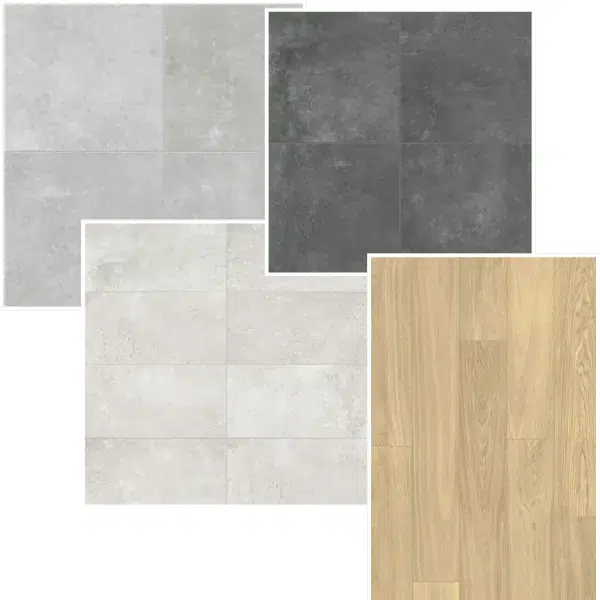
The choice of finishes depends on the stage of construction at the time of your reservation. The earlier you purchase, the more freedom you will have in choosing materials, finishes, and fixtures. A digital Home Configurator is available to buyers to facilitate customization. This intuitive tool allows you to view your home in 3D, configure several elements of the home directly online, and automatically update your quote.
Buying a new apartment has several major advantages over an existing property:
To learn more about this topic, see our article on the advantages of new real estate.
There are two important stages involved in purchasing a new apartment: provisional acceptance and final acceptance. These stages allow you to check that the property complies with regulations.
Provisional acceptance
Provisional acceptance occurs when the property is considered complete and ready for occupancy. A detailed inspection is organized in the presence of the parties concerned in order to examine the dwelling.
A report is then drawn up, listing any visible defects or finishes that need to be corrected. These elements, known as apparent defects, must be rectified within an agreed period of time. A period of at least one year begins during which any defects related to normal use of the property can be reported (e.g., malfunctioning equipment).
Final acceptance
Final acceptance takes place at least one year after provisional acceptance. It marks the final validation of the property, once any comments have been addressed. After this stage, the ten-year warranty remains in effect for ten years from the date of provisional acceptance. It covers serious defects that may affect the solidity or stability of the building, such as structural problems, waterproofing issues, or problems affecting load-bearing elements.
The decision between buying a new property and one that needs renovating depends mainly on budget constraints, the desired level of comfort, and risk management.
A new apartment today offers a level of security and predictability that is hard to match. It is designed according to the latest standards, particularly in terms of energy performance (EPB), acoustics, and thermal comfort. In practical terms, this translates to lower energy consumption, better insulation, and a more pleasant living environment on a daily basis.
Another major advantage: no renovations are needed in the near future. Unlike older properties, which often require renovations (electrical work, heating, insulation, finishing touches), a new home is delivered move-in ready, with modern amenities that meet current standards.
New construction also allows you to customize your home as the project progresses: choose finishes, materials, the kitchen, and even appliances. Discover our Home Configurator, an immersive digital tool that lets you view your future home in 3D, modify the layout, choose your finishes, and add furniture according to your preferences—all with just a few clicks.
Finally, off-plan purchases are governed by the Breyne Act , which provides essential safeguards: a completion guarantee, a ten-year warranty, adherence to construction deadlines… all of which offer the buyer significant peace of mind.
On the other hand, a property in need of renovation may seem attractive at the time of purchase, but it often involves additional costs and uncertainties: renovation costs that are difficult to predict, variable timelines, and technical or zoning restrictions.
To learn more about all the benefits of buying off-plan and investing in new-build properties, check out our full article